
When My Daughter Asked Me to Help Her Nervous System Settle
Nov 09, 2026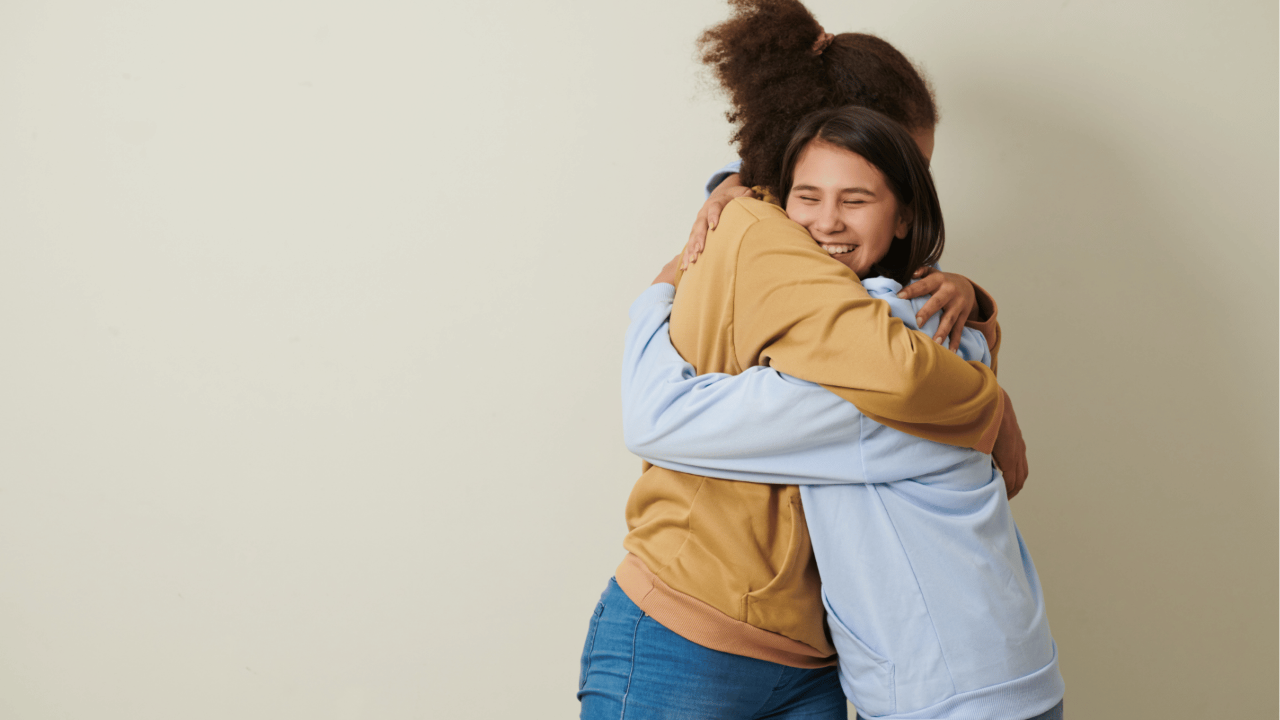
What a 30-second hug taught me about co-regulation
Club volleyball tournaments are a shock to the nervous system. Balls fly across multiple courts. Whistles, cheers, and chants echo off the gym walls. Bright fluorescent lights shine overhead. Tight schedules and performance pressure add another layer. Even regulated adults can leave these gyms feeling overstimulated. So it was not surprising when my daughter's anxiety showed up one weekend.
When anxiety takes root in the body
For my daughter, anxiety often takes root in her stomach. First there is tightness. Then nausea. Then a growing worry that she might get sick. Once that loop begins, the physical sensations and anxious thoughts can feed each other. At one point during the tournament, she quietly asked if I could go to the bathroom with her. There was no drama and no attention drawn to the moment. She simply recognized that she was struggling and asked for support.
And yes, this was a quiet YAY moment. Emotional maturity was doing its work.
Once we were inside, her eyes filled with tears. "I'm really anxious. My stomach hurts. I feel nauseous and overwhelmed." I looked at her and asked, "Would you like my help with this?" She nodded.
I offered a 30-second hug
I offered her a 30-second hug, which she happily accepted. We hugged. We swayed gently. I stayed slow and grounded. My breathing set the pace, and I let her decide when to release. I was not trying to talk her out of the anxiety. I did not tell her there was nothing to worry about or rush her back into the gym. I offered my steady presence and allowed her body time to respond.
I could feel the shift. Her shoulders softened. Her breath deepened. Her body leaned into mine. Her nervous system began to settle as it borrowed some of the steadiness in mine. When she pulled back, she looked at me and said, "Okay. I already feel better." She washed her face, went back out, and had a great time for the rest of the tournament.
This is co-regulation
When a child is overwhelmed, their nervous system may struggle to regulate on its own. If a calm, grounded, trusted adult is available, that relationship can help the child return to a more workable state. The technical term for this is co-regulation. What it really means is that regulation happens in relationship. A steady adult can act as a temporary external regulator. The child's breathing may slow. Their body may soften. They receive the message: I am safe, I am not alone, and I do not have to manage this moment entirely by myself.
Co-regulation can look like a hug, but it does not have to. For one child, it may be sitting quietly nearby. For another, it may be a calm voice, rhythmic movement, a hand to hold, a familiar song, or help leaving an overwhelming environment. The useful form depends on the child, the relationship, and the moment. The important part is that we are not demanding regulation from a child while adding more alarm to the system.
Asking for help is a regulation skill
I do not want to overlook what my daughter did before the hug. She noticed the signals in her body. She recognized that the anxiety was growing. She found me. She asked for privacy, and then she told me what she was experiencing. That is not a failure to regulate independently. That is self-awareness and self-advocacy.
We sometimes talk about emotional independence as though a mature person should always be able to calm themselves alone. But human beings regulate in relationship throughout our lives. Adults call a trusted friend, lean into a partner, sit with a therapist, or seek the presence of someone who helps them feel grounded. Knowing when support would help, and being able to ask for it, is a meaningful capacity.
Co-regulation is not rescuing
Helping a child regulate does not mean removing every challenge or making every uncomfortable feeling disappear. My daughter still returned to the tournament. The gym was still loud. The pressure and stimulation did not vanish. What changed was that she had enough support to move through the moment and re-enter the experience. I did not take over her emotional work. I joined her long enough for that work to become manageable again.
This is an important distinction. Connection does not ask us to eliminate all frustration, anxiety, or discomfort. It gives children a safe relationship in which they can experience those feelings without being consumed by them.
What children internalize over time
Over time, children internalize repeated experiences of being supported through overwhelm. They become more familiar with the signals in their bodies. They learn which forms of support help. They develop language for what they are experiencing. Their own regulation tools grow. Sometimes one of those tools is asking a parent to co-regulate.
This is what parenting with dignity, direction, and deep connection can look like. My daughter did not need a lecture, a pep talk, or pressure to pull herself together. She needed a calm place to land for 30 seconds. Connection was the most effective regulation tool available in that moment.
A little something to notice this week
The next time your child begins to feel overwhelmed, pause before reaching for instructions. Ask yourself: What is my own nervous system communicating right now? Can I make my voice, breathing, and body a little slower? What form of connection can my child receive in this moment?
Do they need help changing the environment, or do they simply need me to stay close while the feeling moves through?
Co-regulation does not have to be complicated. Sometimes it is a 30-second hug in a volleyball tournament bathroom and the quiet message underneath it: You are not alone. I am here. We can help your body find its way back.
Let's work together! I provide 1:1 support for parents motivated to make positive changing in their parenting and gain confidence and increase fulfillment in their role as parents. If this sounds like it might be what you've been looking for, book a free consultation today.
Stay connected with news and updates!
Join our mailing list to receive the latest news and updates from The 3D Parent.

