
What Happened Since We Took Away the iPads and YouTube
Oct 25, 2026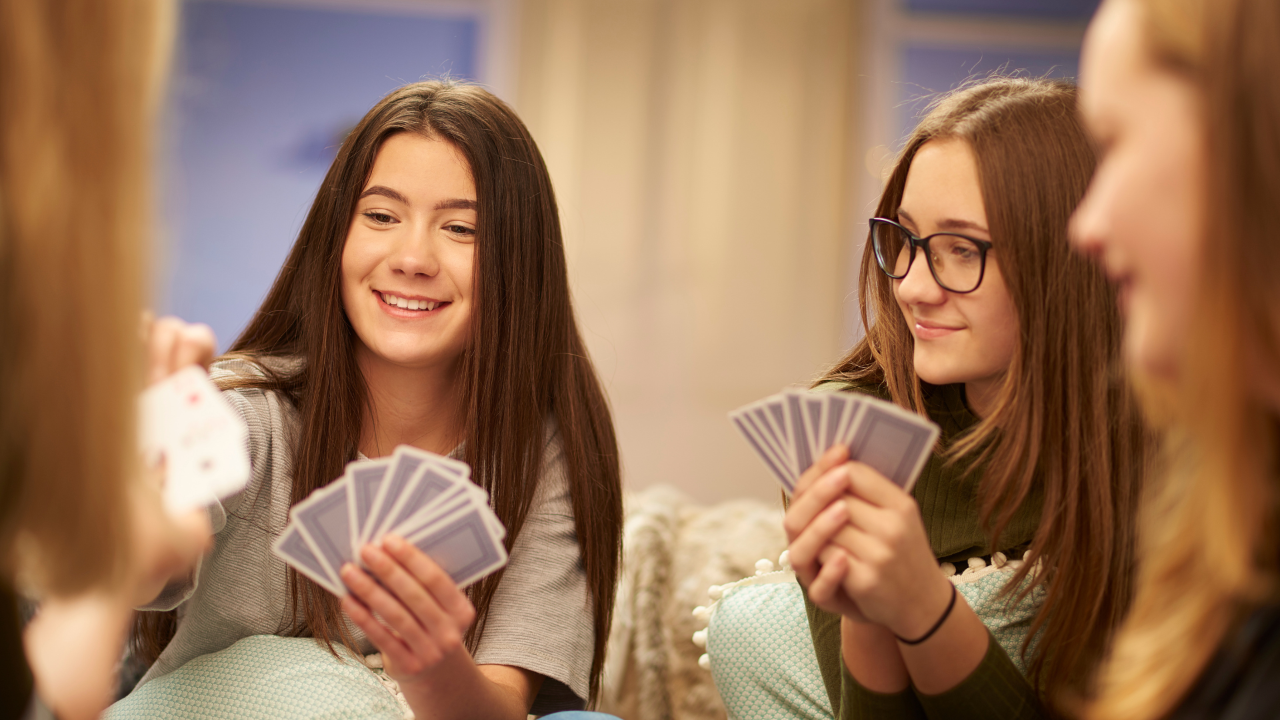
It's been about two months since we took away our 12- and 14-year-old kids' iPads and blocked access to YouTube.
And one of the biggest changes surprised me.
I almost never hear, “I'm bored” anymore.
Which is fascinating, because I used to hear it all the time.
Looking back, I think I understand something now that I didn't fully appreciate before.
A lot of the “I'm bored” complaints happened after their YouTube time had ended.
After the rapid stimulation of short-form videos, everything else seemed boring by comparison.
Drawing? Boring.
Playing a game? Boring.
Going outside? Boring.
Sometimes even watching an actual movie felt like too much of an ask.
Once short-form videos were no longer part of the equation, that began to change.
What we've noticed
Over the past month and a half, our kids have become more interested in the things that were already there.
They're interacting with each other more.
They're more likely to pull out a board game or card game or do something interactive as a family.
One is spending significantly more time drawing, crafting, and creating.
The other is playing her guitar more, learning songs, singing, and pursuing music.
And one of my kids has noticed a significant difference academically. She's more focused and engaged with school and has told me herself that her motivation and ability to get through homework feel so much better than they did last school year.
They're still using technology.
They text friends. They video-call. They play approved games. They use apps like Duolingo. Technology is still part of their social lives, learning, and entertainment.
But right now, it feels far more balanced and developmentally appropriate for them.
And that was our goal.
Don't expect the space to fill immediately
Now, here's something important if you're considering making a similar change:
Your child may not immediately start painting landscapes, practicing piano, reading novels, and joyfully playing board games with their siblings.
There may be a gap.
When a child has become accustomed to highly stimulating entertainment being readily available, taking it away can initially leave them genuinely unsure what to do with themselves.
You may hear:
"I'm booooored."
"There's literally nothing to do."
"What am I supposed to do now?"
That's okay.
Boredom isn't necessarily a problem we need to solve.
Sometimes it is the uncomfortable space a child has to move through before something else becomes interesting again.
But some kids will need a bridge
This is especially important for the complex kids, like those of my coaching clients.
A child with ADHD, executive-function challenges, anxiety, autism, or intense interests may genuinely have difficulty initiating another activity.
So there's a difference between allowing boredom and simply leaving a child without support.
You might put appealing supplies somewhere visible. Keep games accessible. Help a child brainstorm a few possibilities. Invite them into something you're already doing. Make it easier to access an existing interest.
And then resist the urge to become the activity coordinator.
We can create conditions that make engagement easier without taking responsibility for keeping our children entertained every waking minute.
There's another adjustment parents don't always anticipate
Your kids may become more present.
Which sounds wonderful.
And it is.
But let's talk about what “more present” can actually look like.
More questions.
More sibling interaction.
More card games.
More craft projects spread across the kitchen table.
More requests to bake something.
More music.
More conversations while you're trying to answer an email.
And quite possibly more noise and more mess.
Screens don't only meet needs for children. Sometimes they meet needs for parents too.
They give us time to cook dinner, get something done, help another child, or simply experience twenty uninterrupted minutes of quiet.
So if you reduce screens and suddenly think, Wait…why is everyone in my kitchen?—nothing has gone wrong.
This is part of the tradeoff.
The goal isn't a screen-free childhood
I don't want my kids to grow up afraid of technology, and I'm not trying to eliminate it from their lives.
I want them to have more than one place to find satisfaction.
I want them to know what they like to create. What interests them. What they enjoy learning. Who they like connecting with. How they like to move their bodies. What helps them rest. What they reach for when they're bored.
And I want technology to have an appropriate place among all of those things.
For our family, removing iPads and YouTube didn't leave the giant hole I worried it might.
If anything, it made some of the other parts of my kids' lives interesting again.
And that may be my biggest takeaway from this experiment so far:
Sometimes we're not trying to fill the space left behind by screens. We're giving our kids enough time and space to rediscover what was already there.
Let's work together! I provide 1:1 support for parents motivated to make positive changing in their parenting and gain confidence and increase fulfillment in their role as parents. If this sounds like it might be what you've been looking for, book a free consultation today.
Stay connected with news and updates!
Join our mailing list to receive the latest news and updates from The 3D Parent.

